Hauke Group

Quantum Technologies Theory

Our research mission is to achieve a deeper understanding and precise control of quantum matter.

View publications Join the team

Research

Quantum Simulation

Solving quantum many-body problems beyond the limits of classical computers using quantum devices

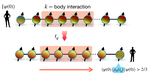
Quantum Computation

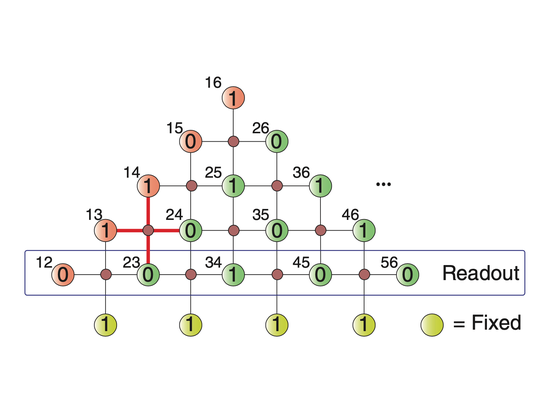
Developing algorithms for solving real-world problems on today’s and tomorrow’s quantum computers

Quantum Information in Many-Body Systems

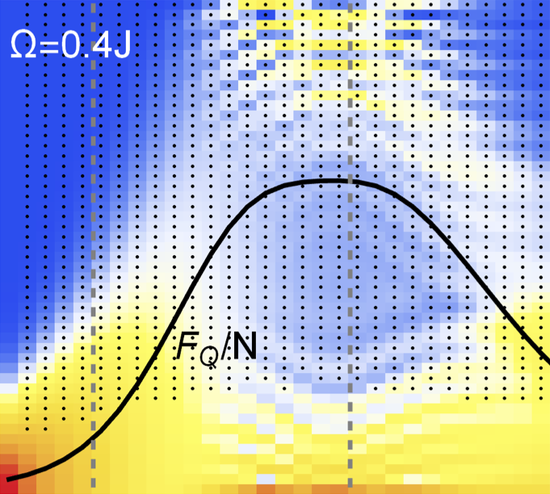
Unravelling the mysteries behind the most exotic phases of quantum matter


Our research is geared towards leveraging the potentials of quantum matter with the aim of developing novel quantum technologies such as quantum simulation, quantum computation, and quantum metrology.

We perform theoretical studies based on analytical and numerical methods, as well as develop proposals for realizing and characterizing phase diagrams and non-equilibrium dynamics of quantum many-body systems.

These proposals draw on the astonishing abilities of quantum devices, e.g., based on ultracold quantum gases, trapped ions, or superconducting qubits, which are now reaching a level of precision and control that has been unimaginable just a few decades ago.

Go ahead and find out more about our research topics by clicking on the project cards above.

Recent Preprints

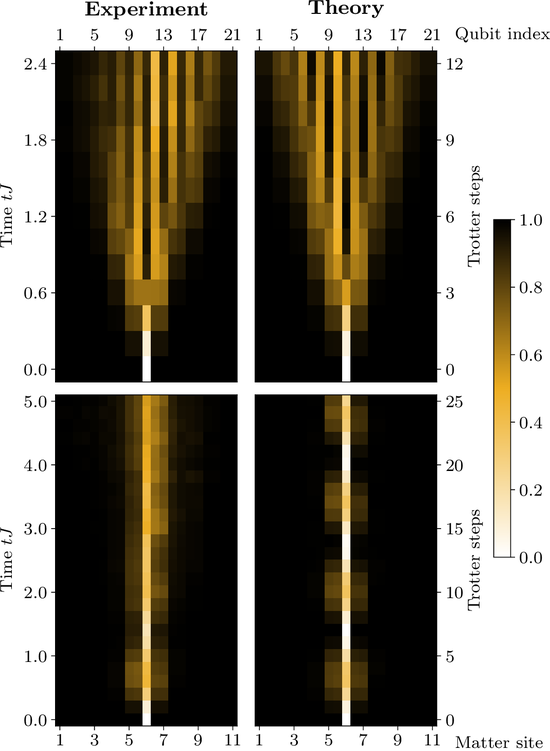
Towards 2+1D quantum electrodynamics on a cold-atom quantum simulator

Cold atoms have become a powerful platform for quantum-simulating lattice gauge theories in higher spatial dimensions. However, such …

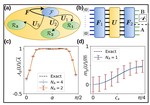
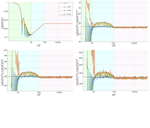
Quantum simulation using Trotterized disorder Hamiltonians in a single-mode optical cavity

All-to-all interacting and disordered many-body systems are notoriously hard to simulate on quantum platforms, as interactions are …

Deep Thermalization and Measurements of Quantum Resources

Quantum resource theories (QRTs) provide a unified framework for characterizing useful quantum phenomena subject to physical …

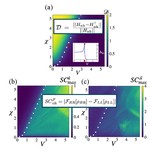
When the center matters: color screening and gluelumps in dihedral lattice gauge theories

Confinement is one of the hallmarks of quantum chromodynamics (QCD). Yet, its first-principle characterization, even in simpler models, …

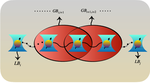
From single-particle to many-body chaos in Yukawa--SYK: theory and a cavity-QED proposal

Understanding how quantum systems transition from integrable to fully chaotic behavior remains a central open problem in physics. The …

Recent Journal Articles

Expediting quantum state transfer through long-range extended XY model

Going beyond short-range interactions, we explore the role of long-range interactions in the extended 𝑋⁢𝑌 model for transferring …

Recognizing critical lines via entanglement in non-Hermitian systems

The non-Hermitian model exhibits counterintuitive phenomena that are not observed in the Hermitian counterparts. To probe the …

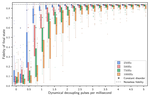
Practical Noise Mitigation for Quantum Annealing via Dynamical Decoupling -- Towards Industry-Relevant Optimization using Trapped Ions

Quantum annealing is a framework for solving combinatorial optimization problems. While it offers a promising path towards a practical …

Quantifying non-Hermiticity using single- and many-particle quantum properties

The non-Hermitian paradigm of quantum systems displays salient features drastically different from Hermitian counterparts. In this …

The Moments of the Spectral Form Factor in SYK

In chaotic quantum systems the spectral form factor exhibits a universal linear ramp and plateau structure with superimposed erratic …

People


Join the Team

Our group regularly has openings for motivated Postdocs as well as PhD, Master, and Bachelor students. If you are interested, please contact us.

Project topics include quantum simulation of lattice gauge theories, holographic matter, and other many-body phenomena, quantum optimization and computation, as well as entanglement and other quantum-information properties in many-body systems. For more information, see research.


Principal Investigator

Avatar
© Alessio Coser

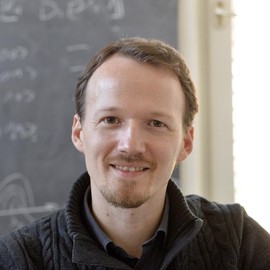
Philipp Hauke

Professor

Administration

Avatar

Sara Rebecchi

Team assistant

Researchers

Avatar

Edoardo Ballini

PhD Student

Avatar

Alberto Bottarelli

PhD Student

Avatar

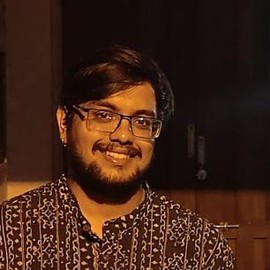
Ganesh Hanchanahal

PhD Student

Avatar

Sebastian Nagies

PhD Student

Avatar

Alex Windey

PhD Student

Contact

Affiliations

Our group is located at the Physics Department of the University of Trento, a research-oriented university that regularly tops rankings of Italian universities of comparable size.

Our group is embedded in the Pitaevskii BEC Center — a joint interinstitutional effort between CNR-INO and the University of Trento, bringing together theorists and experimentalists with the aim of gaining a deeper understanding of the physics related to Bose–Einstein condensation as well as achieving precise experimental control over ultracold atomic systems.

Moreover, we are part of Q@TN — Quantum Science and Technology in Trento — an interdisciplinary organization bringing together Physicists, Computer Scientists, Mathematicians, Material Scientists, and Engineers to advance the development of quantum technologies.

We are members of INFN-TIFPA, where we contribute in particular to the Research Network (Iniziativa Specifica) QUANTUM, which pursues a quantum-information approach to strongly correlated matter. Aims of our research within this initiative are to design quantum simulations for lattice gauge theories and analog gravity, to illuminate the role of entanglement in many-body systems, and to design methods to extract complex observables from experimental data.


Funding

Our group is receiving funding from the Provincia Autonoma di Trento, and Q@TN — Quantum Science and Technology in Trento. Moreover, we are funded by the projects

  • Holograph - Swiss State Secretariat for Education, Research and lnnovation (SERI) under contract number UeMO19-5.1i (Subcontractor). Partners: EPF Lausanne, ETH Zurich, University of Geneva.

  • MagicApp - German Federal Ministry for Education and Research under the funding Reference No. 13N16437 (Subcontractor). Partners: eleQtron GmBH, University of Siegen, Infineon Austria.

  • SQuaSH - Fondazione CARITRO, Cassa di Risparmio di Trento e Rovereto, Progetto Scalable QUAntum Simulation of Yukawa-SYK Holography (CUP: E63C24002750007).

  • Quantum System Identification by Hamiltonian Learning - Honda Research Institute Europe.

  • Quantum-classical hybrid algorithms for real-world inspired application problems - Honda Research Institute Europe.

  • Validating quantum effects in quantum approximate optimization, Quantum Credits, IBM Research GmbH.

Past grants:

  • NeQST - European Union’s Horizon Europe research and innovation programme, grant agreement No 101080086.

  • CoQus - European Union under NextGenerationEU, PRIN 2022 Prot. n. 2022ATM8FY (CUP: E53D23002240006).

  • DYNAMITE - QuantERA II Programme through the European Union’s Horizon 2020 research and innovation programme, Grant Agreement No 101017733.

  • European Union under NextGenerationEU via the ICSC – Centro Nazionale di Ricerca in HPC, Big Data and Quantum Computing.

  • StrEnQTh European Research Council (ERC) under the European Union’s Horizon 2020 research and innovation programme ERC-2018-STG project Strong Entanglement in Quantum many-body Theory, Grant agreement No. 804305.

  • DAVNE - Italian Ministry of University and Research (MUR), FARE grant (Grant R20PEX7Y3A).

Views and opinions expressed are however those of the author(s) only and do not necessarily reflect those of the European Union or the European Commission. Neither the European Union nor the granting authority can be held responsible for them.